
The first days of August 2026 marked a paradigm shift in the global Web3 industry. While traditional markets analyze the outcomes of the US Federal Reserve's interest rate meeting and macroeconomic GDP indicators, the decentralized sector has moved beyond the passive investment stage. The main news story of the week was a record surge in volumes on prediction markets, where trading volumes for contracts on real-world event probabilities exceeded historical highs.
Users and institutional players are no longer satisfied with simply holding tokens in anticipation of growth. The market demands smart tools capable of tokenizing the probabilities of macroeconomic decisions, asset volatility, and global events in real time.
This shift coincided with growing demands placed on underlying networks: traditional infrastructure is failing to cope with the flow of rapid event-driven transactions.
Technological Breakthrough: The Integration of Intelligence and the Agentic Economy
Beyond macroeconomic news, early August 2026 will be remembered for the final transition from theory to practice in the Agentic Economy.
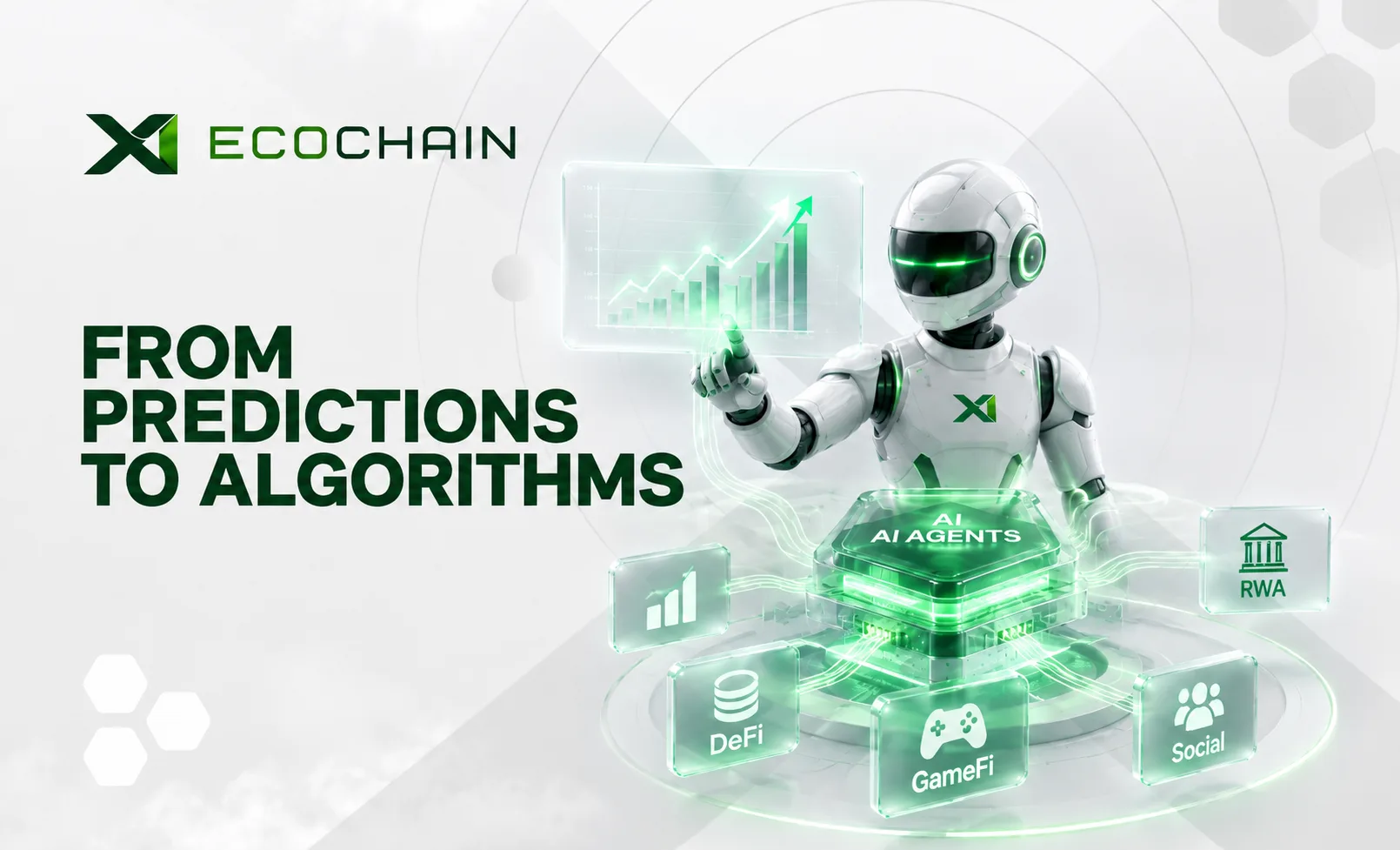
Experts note that the concept of AI and blockchain has evolved from a loud narrative into a mandatory standard for dApp architecture. Today, autonomous neural network agents do not merely analyze data; they independently execute complex trading strategies, manage cross-chain liquidity, and create dynamic prediction markets directly within messaging apps.
The industry realized that the combination of blockchain and AI resolves a key fundamental barrier: decentralized networks provide algorithms with a transparent environment and instant financial settlements, while AI completely frees users from the need to perform routine on-chain operations manually.
However, for the connection between blockchain and AI to function without delays and slippage, high-throughput underlying networks are required. Regular blockchain comparison becomes an imperative task for institutions and developers.
A deep blockchain comparison shows that most legacy networks face high gas fees and low throughput when handling frequent microtransactions from AI bots. That is precisely why platforms that combine AI and blockchain technology with a scalable Layer-1 architecture gain the greatest market advantage.
The Role of X1 EcoChain in the New Infrastructure
Against the backdrop of massive market demand for high settlement speeds and the elimination of liquidity fragmentation, the X1 EcoChain blockchain demonstrates a ready-made ecosystem solution.
As a high-performance Layer-1 network, X1 EcoChain offers the exact parameters necessary for interacting with autonomous agents, event-driven technologies, and prediction markets:
Scalability for Microtransactions: The network architecture is optimized for parallel processing and can handle high query frequencies without sharp spikes in fees, which is critical for the operation of AI agents.
Expansion into the Prediction Markets Sector: The X1 EcoChain network is targeting a large-scale integration with prediction markets and is actively attracting new partners. As part of this vector, the platform is joining forces with specialized solutions to build a unified ecosystem of aggregated markets (ranging from sporting events to asset volatility analytics). Furthermore, to accelerate development and attract strong products in this sector, X1 EcoChain has officially announced the launch of a grant program for developers and projects in the field of Prediction Markets.
Hybrid Consensus and Infrastructure for AI Agents: The network integrates architectural modules optimized for autonomous on-chain programs. This enables AI bots to perform high-frequency split-trading and instantly rebalance liquidity across pools without congesting the mempool.
While global financial markets react to macroeconomic signals, technological platforms like X1 EcoChain are laying the groundwork upon which the future economy of autonomous agents and event-driven markets unfolds. The integration of advanced products and native identification positions the ecosystem as a ready-made hub for the next wave of users.