
Early August 2026 brought the digital tech and cryptocurrency market one of the most severe infrastructure incidents of the year. A supply chain attack on Adform, a major European advertising service, allowed attackers to inject malicious JavaScript code into thousands of websites worldwide. The code substituted crypto wallet addresses on the fly directly inside the users' clipboards and input fields.
This case once again clearly demonstrated the fatal vulnerability of centralized Web2 interfaces through which millions of people interact with decentralized finance. When payment security depends on a single advertising script, the industry urgently needs fundamentally different protection mechanisms.
Why Traditional Infrastructure Is Vulnerable and How AI Helps
The issue of address substitution (clipping) has existed for a long time; however, in 2026, the substitution occurs programmatically right inside the browser's DOM tree. Even if a user attempts to re-copy the wallet address, the code intercepts the input event and instantly replaces the 0x... string with the hacker's address.
In search of protection, the decentralized sector turned to ai and blockchain technologies.
Autonomous neural network agents are capable of analyzing client script behavior in real time, validating transactions prior to signing, and instantly blocking suspicious API calls. The synergy of blockchain and ai allows the security check to be shifted from the vulnerable user browser directly to the smart contract level and secure AI oracles.
The combination of ai and blockchain is becoming not just a trend, but a fundamental protective shield for digital assets.
Blockchain Comparison: Native Protection vs. Vulnerable Interfaces
To understand how various networks and infrastructure approaches protect the user from such attacks, let us conduct a blockchain comparison:
1. Address Format
Legacy L1 Networks: Long hashes (
0x7a89...) — easy to substitute unnoticed.Classic L2 / Web2 Interfaces: Long hashes dependent on browser scripts.
X1 EcoChain: Native short domain service
.x1eco.Clipper Resistance
Legacy L1 Networks: Zero (a user cannot verify 42 characters).
Classic L2 / Web2 Interfaces: Depends on antiviruses and frontend.
X1 EcoChain: 100% protection: a
.x1econame cannot be substituted unnoticed.Transaction Analysis
Legacy L1 Networks: Missing at L1 level.
Classic L2 / Web2 Interfaces: Limited by external services.
X1 EcoChain: Native integration of blockchain and ai.
4. Speed and Fees
Legacy L1 Networks: High cost of errors and gas.
Classic L2 / Web2 Interfaces: Low fees, but high vulnerability of Web2 layer.
X1 EcoChain: Parallel execution and minimal gas.
As this blockchain comparison demonstrates, the fundamental security problem lies not only in the wallet code, but also in how the user identifies the recipient.
X1 EcoChain's Answer: Secure Identification and Support Programs
The X1 EcoChain blockchain builds an architecture that eliminates the key attack vectors demonstrated in the August incident.
1. X1 Domains (.x1eco) Domain Service as the Main Shield
The main reason behind the success of address substitution attacks is that a human is physically incapable of remembering a 42-character hash and immediately noticing a swap of a couple of characters in the middle.
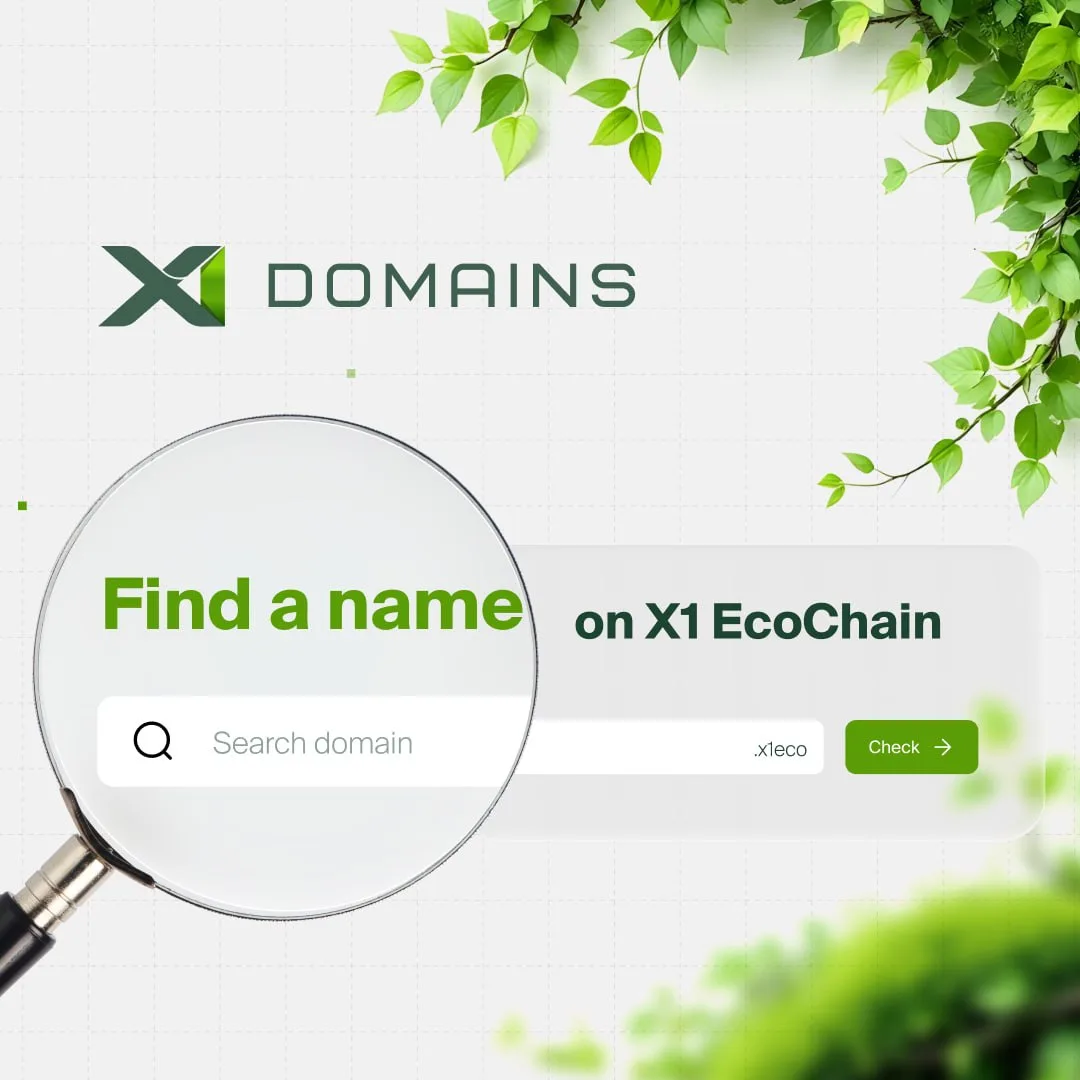
The X1 Domains service (domains.x1ecochain.com) solves this problem fundamentally. By replacing a complex cryptographic value with an easily understandable domain (for example, mike.x1eco), the user can verify the correctness of the address at a glance. Any attempt by a malicious script to replace .x1eco with someone else's hash becomes instantly obvious. The minting of rare 3-character names on domains.x1ecochain.com is ongoing, providing users with native protection.
2. Support for Developers of Secure dApps and Prediction Markets
X1 EcoChain not only develops its core Layer-1, but also actively incentivizes the creation of secure products. As part of its announced Developer Grant Program, the network provides funding to teams building:
Applications in the field of Prediction Markets;
AI agents for automated transaction security verification;
Secure interfaces and Telegram bots resilient to Web2 supply chain attacks.
The Adform incident in August 2026 proved that old onboarding methods and transferring funds using raw hash addresses are obsolete. The X1 EcoChain architecture, combining human-readable .x1eco domains, blockchain and ai technologies, and high scalability, sets a new security standard for the entire Web3 industry.